


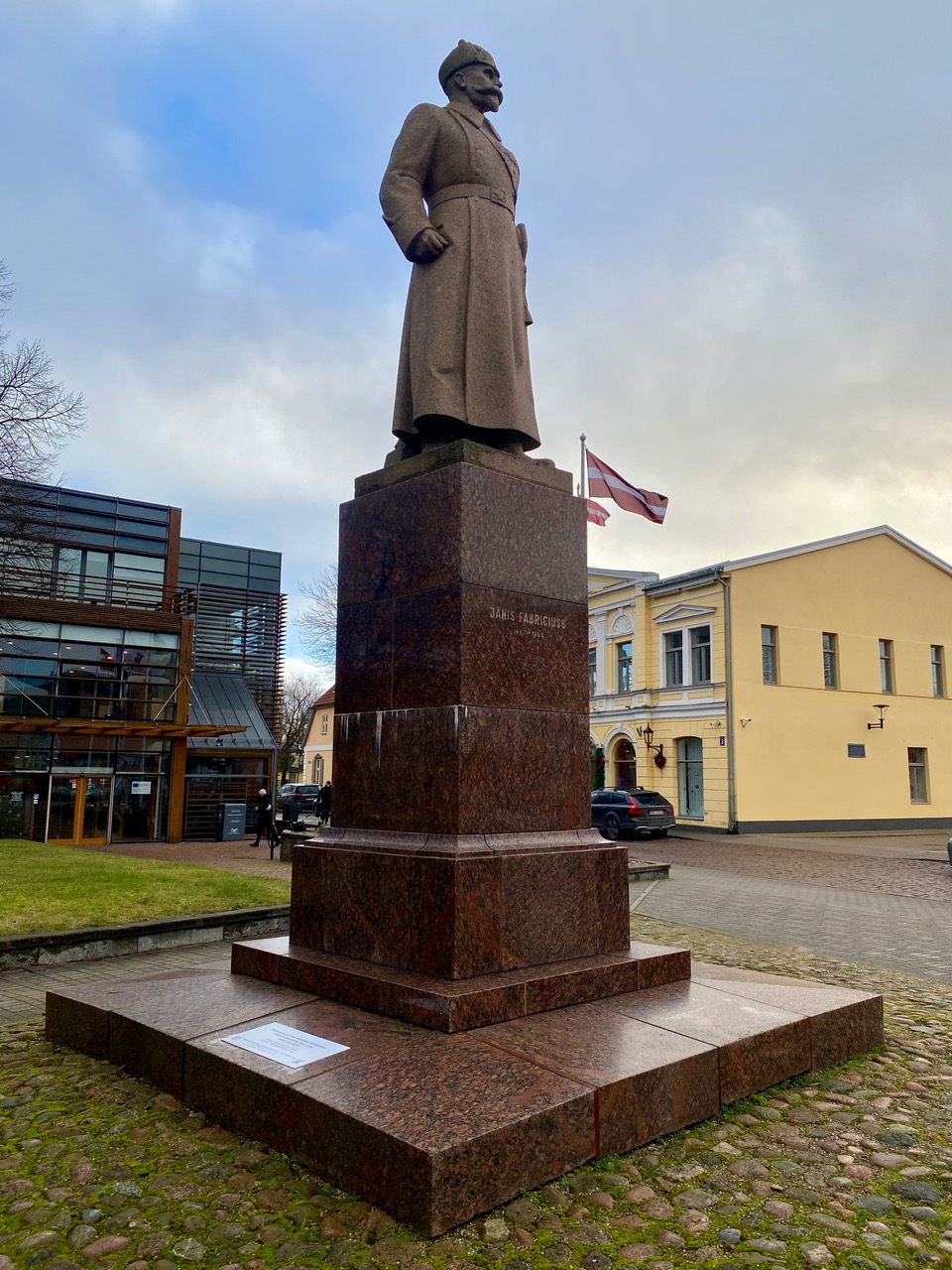
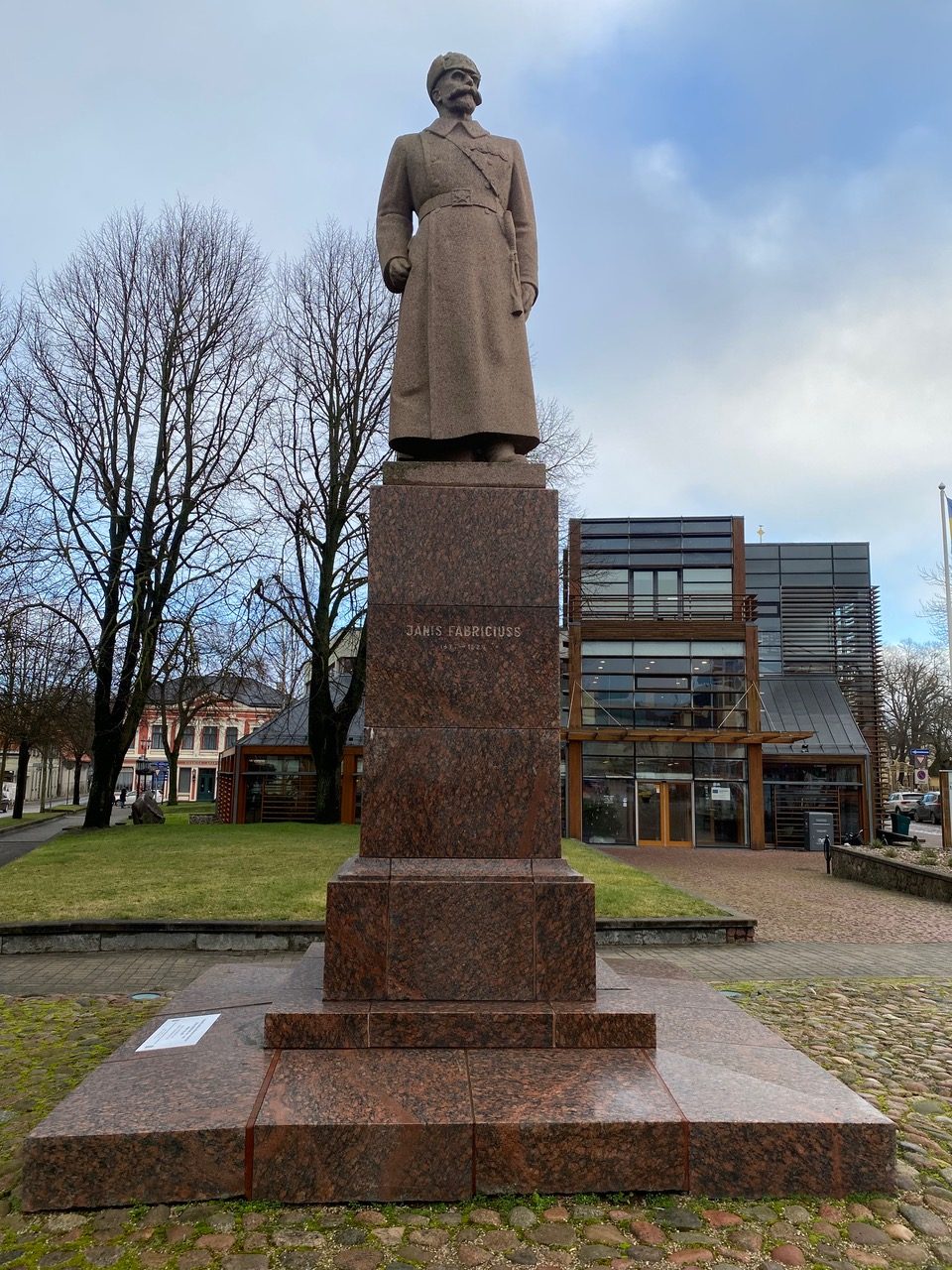
The monument to Jānis Fabriciuss is a typical example of the ideological propaganda and manipulation of society by the Soviet occupation authorities in the mid- to second half of the 20th century. The purpose of such monuments was to honor communist workers of local origin.
J. Fabriciuss (1877 – 1929) was born in Zlēku parish, Ventspils district, into a family of servants. He was a Latvian rifleman, later a Red Army commissar, the only one from Ventspils region to have reached a high military position in the Soviet state, and the only military officer to have been awarded four Orders of the Red Banner. J. Fabriciuss represents those Latvians who became supporters of radical left-wing ideas at the turn of the 19th/20th centuries. He died in a plane crash in Sochi, Russia.
The monument has been preserved as a historical testimony to the era of Soviet totalitarianism and as a significant work of stone sculpture created by the sculptor Jānis Zariņš in the mid-20th century, which, according to the Latvian Artists’ Union, is a continuation of the monumentalist direction of J. Zariņš’s teacher, sculptor Kārlis Zāle. The monument is a unique example of the form and plasticity of granite sculpture of that time in Latvia and also in the Baltics.